
Researchers at IIT Indore have developed HGAST, an AI tool designed to correct gender-specific errors in translations from English to Hindi, Marathi, and Gujarati. The tool acts as a correction layer, identifying and rectifying masculine verb forms often used by AI systems when translating female speech, significantly improving accuracy for female speakers without retraining existing models.

The Haldwani forest division has launched India's first AI-based forest acoustic surveillance system. This innovative technology uses AI, acoustic sensors, and long-range wireless communication to detect illegal logging, poaching, and other suspicious activities in real-time, even in remote areas. Powered by solar energy, the system provides continuous monitoring, significantly enhancing forest protection, wildlife conservation, and biodiversity monitoring efforts.

The father of an IIT Bombay student who died by suicide has alleged that his son faced relentless caste-based mocking and torture from a professor and the administration. A police complaint has been filed, and an FIR registered against a professor for abetment of suicide and under the SC/ST Act. IIT Bombay has removed a Dean from his post following the allegations.

The Mumbai Police has transferred the alleged suicide case of a second-year IIT Bombay BTech student to the Crime Branch after his father filed a complaint alleging casteist slurs and harassment by Professor Suryanarayan Dulla, who was also named in an FIR.

Dr Komal Verma Saluja, a final-year student at Government Medical College Kota (GMCK), has been awarded the "Researcher of the Year Award 2026" by the India chapter of the American College of Physicians (ACP). She is the youngest and first medical student to receive this prestigious accolade. Saluja's research includes identifying an imaging biomarker for early cognitive decline in type 2 diabetes and developing a diagnostic method for fatty liver disease using echocardiography. Her achievements have brought pride to GMCK and highlight the need for more novel diagnostic and therapeutic research in India.
Shoolini University has launched a Centre for Robotics and AI in collaboration with Sirena Technologies to provide students with industrial-grade robotics training and bridge the gap between academia and industry.

The parents of IIT Bombay student Sahil Wakode, who died by suicide, spent eight hours at the Mumbai Crime Branch office, while Union Minister Ramdas Athawale visited IIT Bombay, seeking a thorough investigation into the death and alleging potential caste discrimination.

Students at IIT Bombay are demanding 'meaningful institutional reforms' and greater accountability following the death of Sahil Wakode, a second-year B Tech student. While condemning academic misconduct, students highlight systemic issues and have submitted a comprehensive set of demands to the Director, who has agreed to implement them. The protest also addresses the removal of Dean Suryanarayana Doolla during an investigation into alleged abetment to suicide and caste discrimination, emphasising the need for an independent probe.

Climate scientist Tapio Schneider advocates for expanding early warning systems beyond rainfall events to include other disaster triggers like flash floods, citing the recent Nepal floods. He highlights the inevitability of 1.5 degrees Celsius global warming and discusses the role of advanced climate modelling and AI in improving predictions and research, particularly for regions like India.

A made-in-China humanoid robot, Tiangong Ultra, has shattered Usain Bolt's 100-metre sprint world record, completing the distance in 8.64 seconds compared to Bolt's 9.58 seconds. While a significant technological advancement, experts note the robot's running style differs greatly from humans, highlighting both its strengths in speed and areas where it still lags, such as decision-making and perception.

IIT Bombay has removed Suryanarayana Doolla, Dean of Administrative Affairs, from his post and issued a public apology following the death by suicide of 22-year-old student Sahil Wakode, who his parents allege faced caste-based discrimination.

IIT Delhi has reconstituted the external probe panel investigating the death of an MSc Physics student, appointing retired Delhi High Court judge Mukta Gupta as its head. This decision follows the recusal of the previous chair, Ashok Kumar, and ongoing student protests on campus. The panel includes medical experts and student representatives to examine the circumstances of the alleged suicide.
Karnataka Chief Minister D K Shivakumar met with AI major Anthropic to discuss a long-term partnership aimed at accelerating AI adoption across governance, education, healthcare, research, and the state's startup ecosystem. The collaboration focuses on deploying AI solutions responsibly, ensuring data privacy, and developing AI-focused skilling programmes and an AI University.

All five Indian teenagers who competed at the International Physics Olympiad 2026 won gold medals; thanks to their achievement, India shared the world No 1 ranking with China, Kazakhstan, Russia, South Korea and Taiwan.

Researchers at Delhi's Indraprastha Institute of Information Technology have developed 'MutAIverse', a generative AI platform designed to decode DNA damage and identify potential causes of cancer. Tested on head and neck cancer patients in Guwahati, the platform successfully traced exposure to smokeless tobacco as a contributing factor. This innovation aims to shift focus from just diagnosis to understanding causative factors, potentially aiding in prevention and protection.
Researchers at IIT Indore have developed a groundbreaking method to convert carbon dioxide and glycerol, two common waste materials, into valuable green chemicals like lactic acid and formic acid in just seven minutes. This low-energy process uses a specially designed ruthenium-based catalyst and microwave heating, offering a sustainable solution for waste management and green manufacturing.

'The valley is around 16 km from the Nepal border, and it took just 8-10 minutes for the ice and rocks to reach the Nepal border. You can imagine how fast it must have travelled!'
The US Department of Transportation has proposed new rules to reverse a five-decade ban on overland supersonic flights, driven by advancements in quiet supersonic technology like NASA's X-59 aircraft. This move aims to enable a new era of faster air travel while addressing noise concerns, with final rules expected by mid-2027.
Union Minister Jitendra Singh stated that human-led artificial intelligence will be the defining force in India's journey to becoming a developed nation by 2047. Speaking at the 29th National Conference on e-Governance, he emphasised that technology must strengthen governance without replacing human accountability, advocating for responsible AI deployment with citizens at the centre. The conference concluded with the adoption of the Jaipur Declaration on e-Governance 2026, outlining a roadmap for AI-enabled, data-driven, and secure digital governance.

With the duration of stay capped at four years, the biggest impact of the new F-1 visa rules is likely to be on PhD scholars, students enrolled in longer professional programmes, those whose graduation gets delayed and students moving from one academic programme to another, highlight education experts.

A parliamentary panel has strongly recommended that the Indian government appoint a dedicated 'polar ambassador' to enhance its strategic engagement and diplomatic influence in the critical Arctic and Antarctic regions, aligning with global trends and India's growing focus on polar affairs.
India's indigenous Dilution Refrigerator, developed by AQV, has successfully reached four Kelvin (-269C) at the Quantum Reference Facility in Amaravati, marking a significant milestone in the country's quantum technology development and cryogenic engineering capabilities.

IIT Bhubaneswar researchers have developed 'ArsenSafe', a portable, low-cost device for rapid, on-site detection of arsenic in drinking water. This innovation aims to address the critical public health challenge of arsenic contamination in groundwater, offering a solution that doesn't require laboratory infrastructure.
BIT Mesra has launched 'HimClimX', an AI-powered platform designed for Himalayan climate intelligence and visualisation. It integrates over a century of climate data to offer trend analysis, anomaly detection, spatial visualisation, impact assessment, and AI-driven forecasting for the Himalayan region.
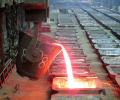
Indian Institute of Technology Bombay has signed a technology licensing agreement with Evergreen Lithium Recycling to improve the extraction of critical minerals from battery reprocessing, aiming to enhance efficiency and reduce costs in battery recycling operations.
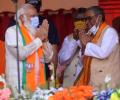
Ten days after the expansion of the BJP government's cabinet in West Bengal, key portfolios have been allocated, with senior leader Tapas Roy taking charge of industries and journalist-turned-politician Swapan Dasgupta appointed finance minister.
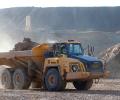
TEXMiN Foundation, IIT (ISM) Dhanbad has signed an agreement with the University of Pretoria, South Africa, for research collaboration in critical minerals, rare earth element processing, recycling, extraction technologies and advanced mining innovation.

Dr Lovi Raj Gupta, pro vice-chancellor, Lovely Professional University, explains how aspiring professionals can equip themselves for a competitive AI-driven job market.

The CBI has conducted searches across Chandigarh, Panchkula, and Delhi-NCR in connection with an alleged Rs 661 crore fraud involving the siphoning of government funds from Haryana government departments and the Chandigarh administration. The probe targets public servants, bank officials, and a private consultancy, with a chargesheet already filed against some accused.

The Trump administration's proposed H-1B wage structure aims to increase pay for skilled overseas workers in the US by an average of $14,000, with Level I wages potentially rising to $97,746. This move, coupled with a weighted selection process favouring higher-skilled workers, is intended to curb abuse of visa programmes and ensure parity with American workers, but has already led to a sharp decline in H-1B applications, particularly from Indian IT companies.
The University of Liverpool and the Indian Institute of Science (IISc) have established a joint seed fund to promote research and innovation collaborations in areas such as AI, biomedicine, quantum technology, and space.

About 45 km from the tech hub of Bengaluru, the Karnataka government is planning a mega artificial intelligence (AI)-powered city with a budget of more than Rs 18,000 crore. To be spread over 9,000 acres, the project aims to follow the theme "Work, live, play" with technology as its core. At the centre of it are, however, thousands of farmers who are protesting against land acquisition by the government.

A delegation of Indian startup founders and leaders visited the UK to explore collaborations in artificial intelligence and technology, aiming to strengthen the India-UK innovation corridor.
Cactus Technology Solutions Private Limited has been empanelled by the National e-Governance Division (NeGD) to provide AI and machine learning expertise for government-led digital initiatives.

How did hundreds of errors slip through multiple stages of drafting, editing, proofreading, expert review and final approval before making their way into classrooms?

From Dr A P J Abdul Kalam to Sourav Ganguly, these coming biopics are bringing some of India's most fascinating lives to the big screen.

India's newly formed Artificial Intelligence Governance and Economic Group (AIGEG) is set to advocate for a unified legal framework for AI companies, including developers of large language models and chatbot systems, alongside broader operational rules.

The Bihar government, led by Chief Minister Samrat Choudhary, has renamed the Sanjay Gandhi Biological Park as 'Patna Zoo' and the Sanjay Gandhi Institute of Dairy Technology as 'Bihar State Institute of Dairy Technology'. The cabinet also approved significant allocations for electricity subsidies, college establishments, and infrastructure projects.
The Karnataka government has formed a committee on responsible AI to develop a framework for the safe, ethical, and transparent adoption of AI across government systems and public services.
Researchers at IIT Kanpur are studying alpha waves in the brain to understand how stress affects cognitive functions. The study aims to build automated models of stress dimensions using EEG and correlating them with factors like loss of control, helplessness, and anxiety.
